Strategy and Organization
Strategic innovation, organizational ambidexterity and dynamic capabilities in firms.


A dual-degree doctorate between Fucape Business School in Brazil and Universidade da Beira Interior in Portugal. The thesis follows the three-product format, and the first year in Covilhã covers the Portuguese curricular units.

Doctoral thesis in progress
Thesis
Three-product thesis format · Strategy and Organization research line
The thesis brings together three distinct products connected by a single subject. Because it is part of the dual degree with UBI, the work answers to two sets of rules that add up: Fucape's institutional model and the requirements of the Cotutelle Agreement.
Supervision
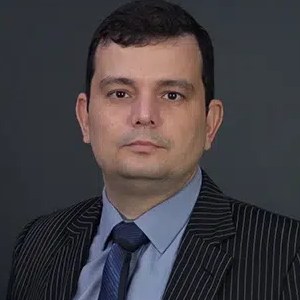
Supervisor · Fucape
Walter Souto de Sousa · Fucape Business School

Co-supervisor · Fucape
Leonardo Fabris Lugoboni · Unifesp — Universidade Federal de São Paulo
Supervisor · UBI
To be assigned · Universidade da Beira Interior
Status
Coursework confirmed · Qualifying exam by July 31, 2027 · Submission by Sep 30, 2028 · Defense by Nov 30, 2028
Research lines
Strategic innovation, organizational ambidexterity and dynamic capabilities in firms.
Ownership and control structures, governance mechanisms — board, management and audit committees — and the tensions specific to the family firm: succession, family influence and performance.
Thesis model
The rules come from two different sources that add up rather than replace one another.
Doctoral Guide 2025/2, ch. 12
Three distinct products, connected to one another by a single subject.
Technological Article
A manuscript addressing a practical institutional problem, proposing a solution aimed at managers, firms or government — not at the academic literature.
Scientific Article
Work emphasizing the understanding of phenomena, designed according to rigorous scientific criteria and generally intended for journals.
Technological Product
A tangible object of high novelty: an innovative organization, social technology, software, a technical-scientific database or a regulatory standard. It may be replaced by a second Scientific Article.
Cotutelle Agreement · additional requirements
These add to the Fucape model and replace none of its parts.
At least three scientific articles
Fucape's standard model formally yields only one scientific article within the thesis — the other two must come from outside the three-product structure.
One in an ISI/Scopus journal
With an impact factor ≥ 1.6 or an H-index ≥ 30.
One at an international conference
At least one of the articles presented at an international event.
Defense and committee
The defense is held in Portuguese or English, with at least two external members on the examining committee.
Enrollment confirmed · 2026 to 2028
June 2027
Arrival in Covilhã roughly two months before classes begin at UBI.
July 31, 2027
Deadline for the qualifying exam and for completing Acompanhamento de Mercado, Desafios de Mercado and Seminários de Pesquisa Aplicada.
September 6, 2027
First semester at Universidade da Beira Interior, through December 17, 2027.
February 14, 2028
Second semester at UBI, through July 7, 2028.
September 30, 2028
Deadline for submitting the thesis for defense.
November 30, 2028
Deadline for holding the defense before the examining committee.
click to read the course description
Course description. Economic activity; supply and demand curves; inflation; monetary, exchange rate and fiscal policy; interdependence between domestic and foreign sectors; markets for goods, labor, credit and foreign exchange; qualitative impact analysis and the assessment of scenarios and trends.
Course description. Scientific research: types, stages and projects. Identifying topics, theoretical frameworks, formulating problems and hypotheses, modeling, research design, articles and technological products.
Course description. Investment, financing and dividend decisions. Optimal capital structure. Financing and agency costs. Corporate financing under asymmetric information. Credit rationing. Investor activism. The risk–return relationship.
Course description. Introduction to quantitative research with primary data; psychometrics; procedures for collecting and analyzing primary data; exploratory factor analysis and structural equation modeling.
Course description. Strategic innovation. Organizational ambidexterity. Dynamic capabilities.
Course description. Discussion of thesis projects developed by doctoral candidates.
Course description. Attendance at technical and scientific events, technical visits and the development of technological products, bringing the doctoral candidate closer to emerging topics in the market.
Course description. Remote technical events with market professionals from the private and public sectors, organized by the candidate and by peers.
Course description. Remote scientific events with invited researchers, tied to the candidate's research line.
Course description. Three-article thesis (Technological Article + Scientific Article + Technological Product or a second Scientific Article). Under the UBI dual degree, the following are added: a minimum of 3 scientific articles, 1 in an ISI/Scopus journal (IF ≥ 1.6 or H-index ≥ 30), 1 at an international conference, a defense in Portuguese or English, and a committee with 2 external members.
Course description. Concepts and techniques of artificial intelligence (AI). Business applications of AI. Value creation through AI. Ethical questions associated with the use of AI.
Course description. Fundamental analysis and firm valuation models. Firm and shareholder cash flow. Cost of capital. Discounted cash flow valuation and relative valuation.
Course description. Transformations in the world of work and their impact on leadership practice. Leadership in hybrid, virtual and digital environments. Inclusive leadership and high-performance organizational cultures.
click to read objectives and topics
S1: Sep 6 – Dec 17, 2027 · S2: Feb 14 – Jul 7, 2028 · all taught as theory and practice, in Portuguese
Objectives. Concepts, techniques and approaches of the research leading to the thesis; strategies across different research paradigms in management; methodological skills to design and carry out a research project; distinguishing types of scientific research and mastering quantitative and qualitative analysis techniques.
Topics. Conceptualization and research in management. Theories as scientific research programs. Content, organization and writing of the research work. Stages of the research process. Types, approaches and techniques for measuring, collecting, analyzing and presenting data.
Objectives. Up-to-date scientific knowledge on strategic topics in operations management; analysis and application of the field's tools and methodologies; fostering interest in research on operations management.
Topics. Theories in operations management. Lean manufacturing. Sustainability and operations management. Supply chain management.
Objectives. In-depth knowledge of business innovation; research attentive to present and future trends; critical analysis of the literature and identification of leading authors' contributions; conducting research with autonomy and originality.
Topics. Theoretical foundations: historical perspective and current approaches. Innovation management and innovative capability, service innovation, innovation systems, technology transfer, open innovation, sustainability and innovation, innovation support policies.
Objectives. The link between ontology, epistemology, methodology and methods; use of open data; distinguishing qualitative from quantitative studies; preparing and selecting analyses; multivariate analysis in SPSS; second-generation techniques — structural equation modeling and PLS — and the reporting of results.
Topics. Research philosophy and data analysis. Analysis software. Open data and data munging. Data description and visualization. Factor and cluster analysis. ANOVA and regression. Introduction to structural equation modeling and PLS.
Objectives. Introduction to contemporary epistemological reflection and its implications for the business sciences; identifying topics and questions in epistemology; understanding the epistemological debate in the field and carrying it into management research.
Topics. Origins of epistemology. Common sense and scientific knowledge. Cartesian epistemology. Bachelard. The Vienna Circle and logical empiricism. Popper and falsificationism. Kuhn and paradigms. Lakatos. Feyerabend. Regional epistemologies in the business sciences.
Objectives. Understanding leadership approaches and analytical models, including the transformational dimension; developing an in-depth view of negotiation; integrating leadership and negotiation as connected processes.
Topics. Leadership: concept, classical approaches and new theories. Negotiation: concept, approaches and conduct of the process. Transactional, transformational and emotional models.
Objectives. A critical understanding of family firms — economic relevance, governance, organizational behavior and performance; identifying distinctive characteristics, family influence, foundational theories and emerging trends.
Topics. Economic relevance. Definitions and models. Objectives and decision-making. Foundational theories. Performance. Family influence. Emerging trends.
Objectives. The role of corporate governance in financial market stability and economic growth; foundations, control theories, ownership and control structures in family firms; governance mechanisms and social responsibility.
Topics. Foundations of corporate governance. Ownership structures. Control mechanisms: the board, directors, audit committees and creditors. Governance models and new trends.
June 2026 to November 2028 — class meetings at Fucape, semesters at UBI, and the qualifying exam and defense deadlines.
Hover over or tap a highlighted day to see the course, the professor and the schedule.
no classes
no classes
no classes
no classes
no classes
no classes
Dates in Brazil come from Fucape's academic system and the official 2026/1 calendar (Strategy and Organization / Finance line). Acompanhamento de Mercado, Desafios de Mercado and Seminários de Pesquisa Aplicada have no fixed dates — they are fulfilled through activities and events by July 31, 2027. The UBI bands follow the Student Handbook (S1: Sep 6 – Dec 17, 2027; S2: Feb 14 – Jul 7, 2028). Dates are subject to change during the program.
The diploma will be published here once the program is completed.